
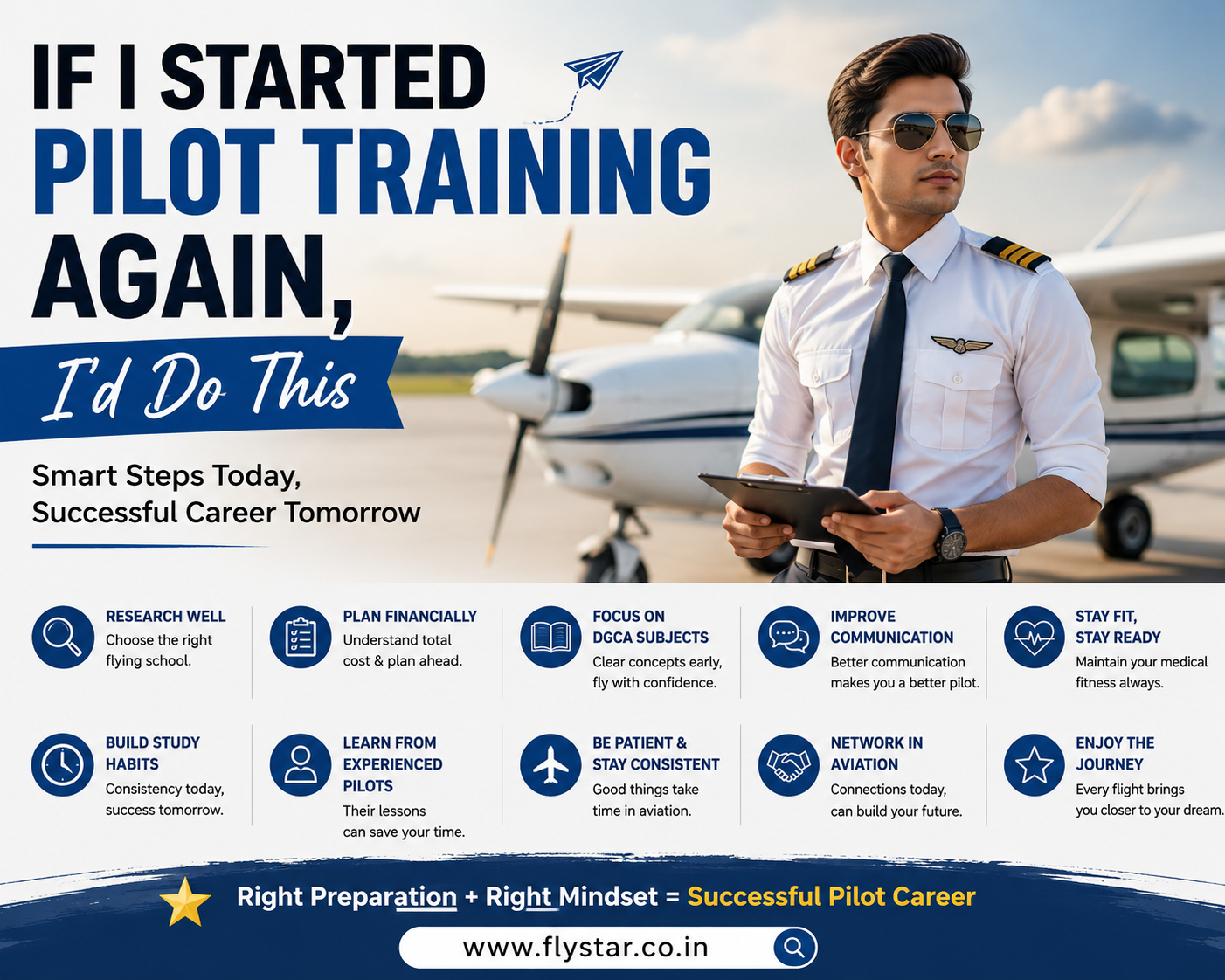
If I Started Pilot Training Again, I’d do this
Becoming a pilot is a dream shared by thousands of aspiring aviators. The idea of flying above the clouds, traveling across the world, and building an exciting career attracts many students every year. However, pilot training is a significant investment of time, effort, and money. Looking back, there are several things many pilots say they would do differently if they had the chance to start over.
If I started pilot training again, I would focus less on rushing to the cockpit and more on building a strong foundation. Here’s exactly what I’d do—and what every aspiring pilot should consider before beginning their aviation journey.
1. Research Pilot Training Academies Thoroughly
The first mistake many students make is choosing a flying school based solely on advertisements or fees. If I had to start again, I would spend more time researching:
- DGCA approvals
- Fleet size and aircraft availability
- Instructor experience
- Student reviews
- Placement assistance
- Training timelines
- Safety records
The right academy can make a huge difference in your training experience and career opportunities.
Questions to Ask Before Joining
- How many aircraft are operational?
- What is the average CPL completion time?
- Are ground classes included?
- Is accommodation available?
- What is the instructor-to-student ratio?
Choosing wisely at the beginning can save months of delays later.
2. Understand the Complete Cost of Training
Many students only look at the advertised CPL fee. In reality, pilot training involves several additional expenses.
Typical Costs Include:
- Ground school fees
- Flying hours
- DGCA examination fees
- Medical examinations
- Uniforms and study materials
- License issuance fees
- Accommodation and living expenses
If I were starting again, I would prepare a complete financial plan before enrolling. Financial stress can negatively impact training and delay your progress.
3. Focus on DGCA Ground Subjects Early
One thing experienced pilots often recommend is clearing DGCA exams as early as possible.
Important subjects include:
- Air Navigation
- Aviation Meteorology
- Air Regulations
- Technical General
- Technical Specific
- RTR (Aero)
If I could start over, I would spend the first few months building a strong understanding of these subjects instead of treating them as an afterthought.
Strong theoretical knowledge makes flying easier and builds confidence in the cockpit.
4. Improve Communication Skills
Aviation is an international profession, and communication is one of the most important skills for a pilot.
I would spend more time improving:
- English speaking
- Aviation phraseology
- Listening skills
- Confidence in communication
- Public speaking
Clear communication is essential during flight operations and can significantly improve performance during interviews and assessments.
5. Start Medical Fitness Preparation Earlier
Many students begin pilot training without understanding DGCA medical requirements.
If I were starting again, I would complete my Class 2 and Class 1 Medical examinations before investing heavily in training.
Additionally, I would:
- Maintain a healthy lifestyle
- Exercise regularly
- Improve sleep habits
- Get regular eye checkups
- Avoid unhealthy routines
Being medically fit is not just a requirement—it's a long-term career necessity.
6. Build Better Study Habits
Pilot training is intense. Managing flying schedules, ground classes, and DGCA exams can become overwhelming.
If I started again, I would:
- Create a daily study plan
- Review lessons immediately after flights
- Maintain organized notes
- Practice mock tests regularly
- Set weekly learning goals
Consistency matters more than studying for long hours occasionally.
7. Learn from Senior Pilots
One of the biggest advantages aspiring pilots have today is access to experienced professionals through seminars, social media, and aviation communities.
I would actively seek advice from:
- Airline pilots
- Flight instructors
- CPL graduates
- Aviation mentors
Learning from people who have already completed the journey can help avoid common mistakes and provide valuable career insights.
8. Keep Realistic Expectations
Many students believe they will complete their Commercial Pilot License (CPL) within a year and immediately secure an airline job.
The reality is different.
Factors affecting training timelines include:
- Weather conditions
- Aircraft availability
- Instructor scheduling
- DGCA examination dates
- Personal preparation
If I started pilot training again, I would approach the process with patience and realistic expectations.
9. Develop a Professional Mindset Early
Pilots are expected to demonstrate professionalism from day one.
I would focus on:
- Time management
- Discipline
- Responsibility
- Decision-making
- Leadership
Building these qualities early helps students transition smoothly into airline environments later in their careers.
10. Log Every Achievement
Pilot training can be challenging, and progress may sometimes feel slow.
If I had another chance, I would document:
- First solo flight
- DGCA exam results
- Flying milestones
- Instructor feedback
- Personal achievements
Looking back at your progress can be incredibly motivating during difficult periods.
11. Network Within the Aviation Industry
Networking is often overlooked by student pilots.
I would attend:
- Aviation events
- Pilot seminars
- Industry workshops
- Airshows
- Aviation webinars
Building connections can open doors to mentorship opportunities and valuable industry knowledge.
12. Enjoy the Journey
Perhaps the most important lesson is to enjoy the process.
Pilot training is demanding, but it is also one of the most rewarding experiences. The excitement of your first flight, first solo, and earning your wings are moments you'll remember forever.
If I started pilot training again, I would spend less time worrying about timelines and more time appreciating the journey itself.
Final Thoughts
Pilot training is more than earning a license—it's the beginning of a lifelong career in aviation. If I had the opportunity to start again, I would focus on preparation, discipline, communication skills, and building a strong foundation before stepping into the cockpit.
Every aspiring pilot's journey is unique, but the lessons remain the same: research thoroughly, stay committed, maintain realistic expectations, and never stop learning.
The aviation industry offers incredible opportunities for those willing to put in the effort. Whether you're preparing for your first DGCA exam or your first solo flight, remember that every great pilot was once a student with a dream.
Ready to Start Your Pilot Journey?
Get free expert guidance from our airline pilot mentors.
📱 Talk to an Expert on WhatsApp